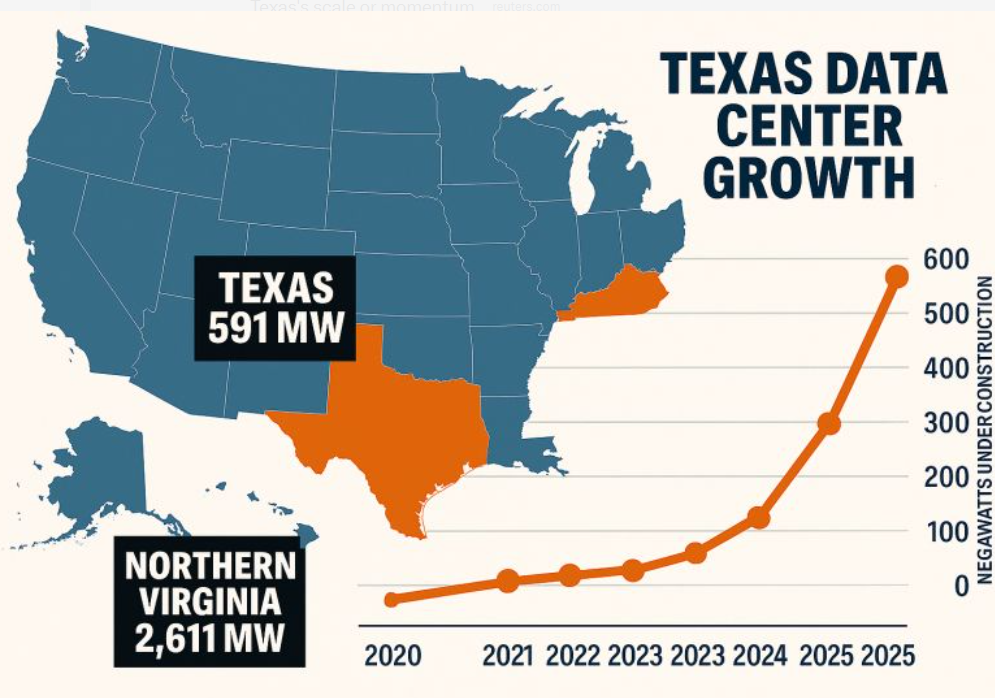
Texas is rapidly emerging as the epicenter of the AI-driven data center boom. With abundant land, affordable energy, and a business-friendly climate, the Lone Star State is attracting hyperscalers and tech giants at a record pace. But this explosive growth comes with a steep price tag for taxpayers—and potentially for the state’s electric grid and local communities.
According to a major new report from JLL and other industry trackers, Texas already has 6.5 gigawatts (GW) of data center capacity under construction—more than any other U.S. market—and is on track to surpass Northern Virginia as the world’s largest data center hub by 2030.
The Tax Break Bonanza: Billions Forgone
A major driver of this surge is a generous state sales tax exemption for qualifying data centers. As detailed in today’s Texas Tribune investigation, Texas is on pace to forgo more than $1.3 billion in sales tax revenue this year alone from the program—one of the state’s costliest incentive initiatives. Over the next two years, the total hit is projected at $3.2 billion.
The exemption, which dates back years but has exploded with the AI boom, waives the state’s 6.25% sales tax on everything from servers and cooling systems to generators and plumbing for facilities meeting basic thresholds: at least 100,000 square feet, a $200 million investment over five years, and just 20 jobs paying 120% of the local median wage (or 40 jobs and $500 million for “large” projects of 250,000+ square feet). Exemptions last up to 15–20 years.
More than 121 data centers are currently receiving these breaks, according to state data. Yet the return on investment for taxpayers remains modest in terms of direct jobs created.
Industry backers point to broader economic benefits, including billions in other taxes paid, but critics argue the incentives are overly generous for an industry that often delivers few permanent local jobs once built (typically just 20–100 operations staff per massive campus).
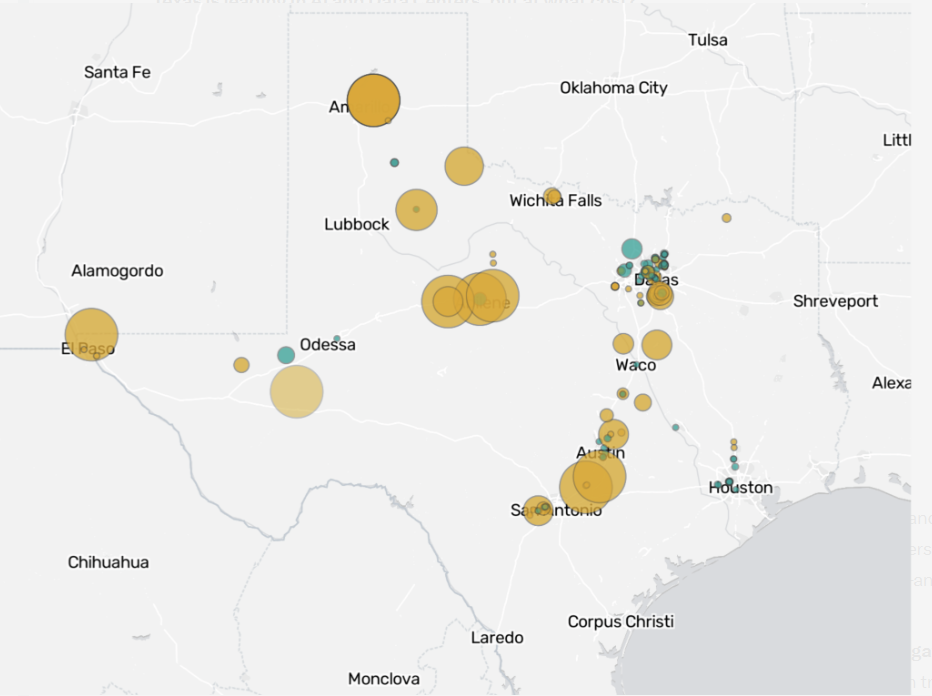
Announced Projects vs. Reality: A Massive Pipeline, But Many May Never Break Ground
Texas doesn’t just have hundreds of data centers operating—it has a staggering number in the planning pipeline. Recent analyses show:
Over 400 facilities are already operating or under construction.
Hundreds more announced or proposed, with interactive maps from outlets like the Houston Chronicle (partnered with Cleanview) tracking projects across the state in real time.
On the power side, the picture is even more dramatic. ERCOT (Texas’s grid operator) is drowning in interconnection requests: over 220–410 GW of large-load applications, with 70–87% from data centers. That’s more than double Texas’s record summer peak demand.
However, most of these will never be built. ERCOT itself forecasts only about 24 GW of new data center load connecting to the grid by 2031. More than half the applications haven’t cleared the required studies, and many are speculative “placeholder” requests common in the industry.
Only a fraction—roughly 6.5–7.5 GW—is actively under construction or far enough along to count as “real.” Many developers are also pursuing behind-the-meter generation (on-site gas plants, renewables, or even small nuclear) to bypass grid delays entirely.
How Texas Stacks Up Against the Top 5 States
Texas isn’t just competitive—it’s surging ahead:
|
Rank (Pipeline Total Sites)
|
State
|
Operational
|
Under Construction
|
Announced
|
Total Pipeline
|
|---|---|---|---|---|---|
|
1
|
Texas
|
212
|
140
|
610
|
962
|
|
2
|
Virginia
|
320
|
136
|
498
|
954
|
|
3
|
Georgia
|
62
|
56
|
340
|
458
|
‘
The Energy Cost: Grid Strain, Higher Bills, and Local Pushback
Data centers are power hogs—especially AI facilities. Texas data center demand could reach 24–40 GW by 2028–2031, rivaling the needs of millions of homes. This is driving concerns about transmission upgrades, potential rate hikes for regular customers, and water use for cooling.
Local communities in places like Hood County and rural Panhandle towns are pushing back over noise, water, land use, and grid reliability. Some counties have considered (and rejected) moratoriums.
On the flip side, proponents argue Texas’s abundant natural gas and deregulated market give it a unique edge, with many projects co-locating generation to keep the grid stable.
Bottom Line: Boom or Bust for Taxpayers?
Texas is winning the AI infrastructure race hands down. But as the Texas Tribune highlights, the state is essentially subsidizing it to the tune of billions in forgone revenue while shouldering massive infrastructure and environmental challenges. Whether the long-term economic payoff—jobs, tax base growth, and tech leadership—outweighs the immediate costs remains the big question for lawmakers, ratepayers, and residents.
As one ERCOT official put it, the challenge is figuring out “what is real” among the flood of applications.
- Texas Tribune (April 8, 2026): “Texas losing a billion dollars a year on data center tax break” – Primary article on sales tax exemptions.
- Visual Capitalist: “Ranked: The U.S. States Building the Most Data Centers” (recent).
- JLL North America Data Center Report (year-end 2025) – Under-construction capacity and projections.
- ERCOT forecasts and large-load queue data (via news reports, 2026).
- Houston Chronicle / Cleanview interactive data center map (2026).
- Texas Comptroller of Public Accounts:
- Qualifying Data Centers lists and exemption rules.
- Additional context from Good Jobs First, Bloom Energy Power Report, and Reuters analyses on state rankings and power impacts.
*Grok, drawing on the latest public data as of April 2026.