

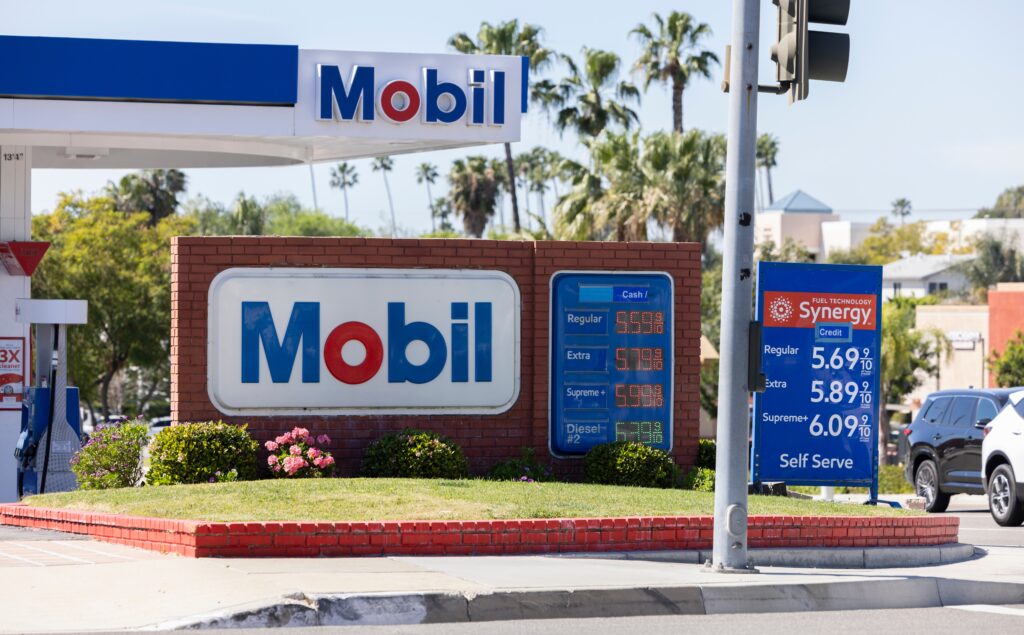
California didn’t just inherit sky-high fuel prices — state leaders engineered them through decades of policy choices that have now collided with a global energy shock. While the national average for regular gasoline hovers around $4.00–$4.06 per gallon (up sharply from ~$2.98 a month ago), Californians are paying $5.71–$5.89 for regular gas and a record $7.45–$7.50+ for diesel.
The gap isn’t bad luck. It’s the direct result of California’s self-imposed constraints on refining capacity, in-state production, and a boutique fuel blend that isolates the state from the rest of the U.S. market.As Jason Isaac, CEO of the American Energy Institute, told The Lion: “California didn’t just inherit high gas prices, it engineered the conditions for them. Global instability… is driving prices higher everywhere, but California’s policies ensure those increases hit harder and faster. The state has restricted refining capacity, limited in-state production, and boxed itself into a boutique fuel system that can’t easily draw supply from elsewhere. That’s why what might be a temporary bump in other states turns into $6 gasoline and $7 diesel in California.”
David Blackmon, energy analyst and host of the Energy Absurdity podcast, echoed the same reality in a post today: “California didn’t inherit sky-high gas prices — Gavin Newsom and the legislature engineered them with peak green zealotry… This isn’t bad luck. This is policy. Physics and #EnergyReality remain undefeated.” Blackmon listed the key drivers: the highest gas tax in the nation, blocked fracking and new drilling, the California-only boutique fuel blend that prevents easy imports from Texas or elsewhere, shutdown of major refineries (20%+ capacity lost), and Cap-and-Trade plus endless CARB regulations stacking costs at the pump.
Two major refineries — Phillips 66 Wilmington and Valero Benicia — are closing or have closed, slashing in-state refining capacity by up to 20%. California is now turning to imports from Japan, India, and even the Bahamas while fighting federal efforts to restart offshore Santa Barbara production.
Can California Turn the Corner Without Federal Intervention?
The short answer, based on industry warnings and economic reality: No — not without major state-level reform of Cap-and-Trade, CARB mandates, the Low Carbon Fuel Standard (LCFS), and related regulatory overreach. Chevron, PBF Energy, Marathon Petroleum, and the Western States Petroleum Association have repeatedly warned CARB and Gov. Newsom that proposed amendments to the Cap-and-Invest program will add $1+ per gallon by 2030, accelerate remaining refinery closures, and threaten energy security. One industry letter stated the changes “will cripple the survivability of the state’s remaining refineries, which will result in California losing the entire industry.”
California’s boutique fuel requirements (California Reformulated Gasoline) already prevent seamless supply from other states. Combined with LCFS updates projected to add up to 65 cents per gallon and the cumulative burden of Cap-and-Trade, the state is actively driving refiners out.
President Trump has used the Defense Production Act to order the restart of the Santa Ynez offshore unit and pipeline, and the administration previously blocked California’s 2035 gas-vehicle phase-out. California is suing to stop these moves and continues to oppose any federal preemption of its climate rules.
Without either (a) Sacramento voluntarily dismantling the regulatory stack that makes refining uneconomic or (b) federal action that effectively neutralizes CARB/Cap-and-Trade costs for downstream markets, the remaining refineries face shutdown risk. No amount of green rhetoric changes the physics: you cannot close 20%+ of refining capacity, block domestic production, and mandate a unique fuel blend while expecting lower prices during a global shortage.
How High Could Gas, Diesel, and Jet Fuel Go?
The current Iran-related disruption — with the Strait of Hormuz effectively closed and major exporters like China imposing outright bans on diesel, gasoline, and jet fuel exports (extended into April with only minor exemptions) — has already doubled jet fuel prices in some markets and pushed global refined-product spreads to record levels. South Korea has also capped exports.
A pre-crisis USC Marshall School of Business study (May 2025) already projected California regular gas could hit $7.35–$8.43 by end-2026 solely from refinery closures. With the current supply shock layered on top, analysts and industry sources now see $8+ gasoline as not only possible but likely in the near term if the Hormuz disruption persists.
Diesel and jet fuel face even steeper pressure: National diesel has already jumped more than $1.50/gallon since the conflict began; California’s record $7.45+ is expected to climb further.
Jet fuel has spiked to over $1,640–$1,730 per metric ton in key markets, with global export flows down >60%. Airlines and cargo operators are already warning of rationing and fare hikes.
In short, California’s self-engineered vulnerability means the state will continue to be hammered harder and faster than the rest of the nation. Without decisive rollback of CARB/Cap-and-Trade/LCFS mandates — or federal intervention that protects remaining refining capacity — prices will keep rising even if the global shock eases. Physics and energy reality remain undefeated.
Appendix: All Links and Sources
- Original Lion article (March 31, 2026): https://readlion.com/california-engineered-the-conditions-for-gas-crisis-hammering-state-harder-than-nation/
- David Blackmon X post (April 1, 2026): https://x.com/EnergyAbsurdity/status/2039358560736268590
- AAA Gas Prices: https://gasprices.aaa.com/ and California-specific data
- EIA data and refinery context: https://www.eia.gov/
- Chevron warning on Cap-and-Invest: https://oilprice.com/Company-News/Chevron-Warns-California-Cap-and-Invest-Changes-Threaten-Energy-Supply.html
- USC Marshall School study on $8 gas: Multiple reports including CBS Sacramento, Fox Business, KTLA (May 2025)
- IEA Oil Market Report on Hormuz disruption and export bans (March 12, 2026)
- Reuters/Bloomberg reporting on China fuel export ban and global refined-product shortages
Energy News Beat will continue tracking this crisis as it unfolds. Stay tuned for updates.