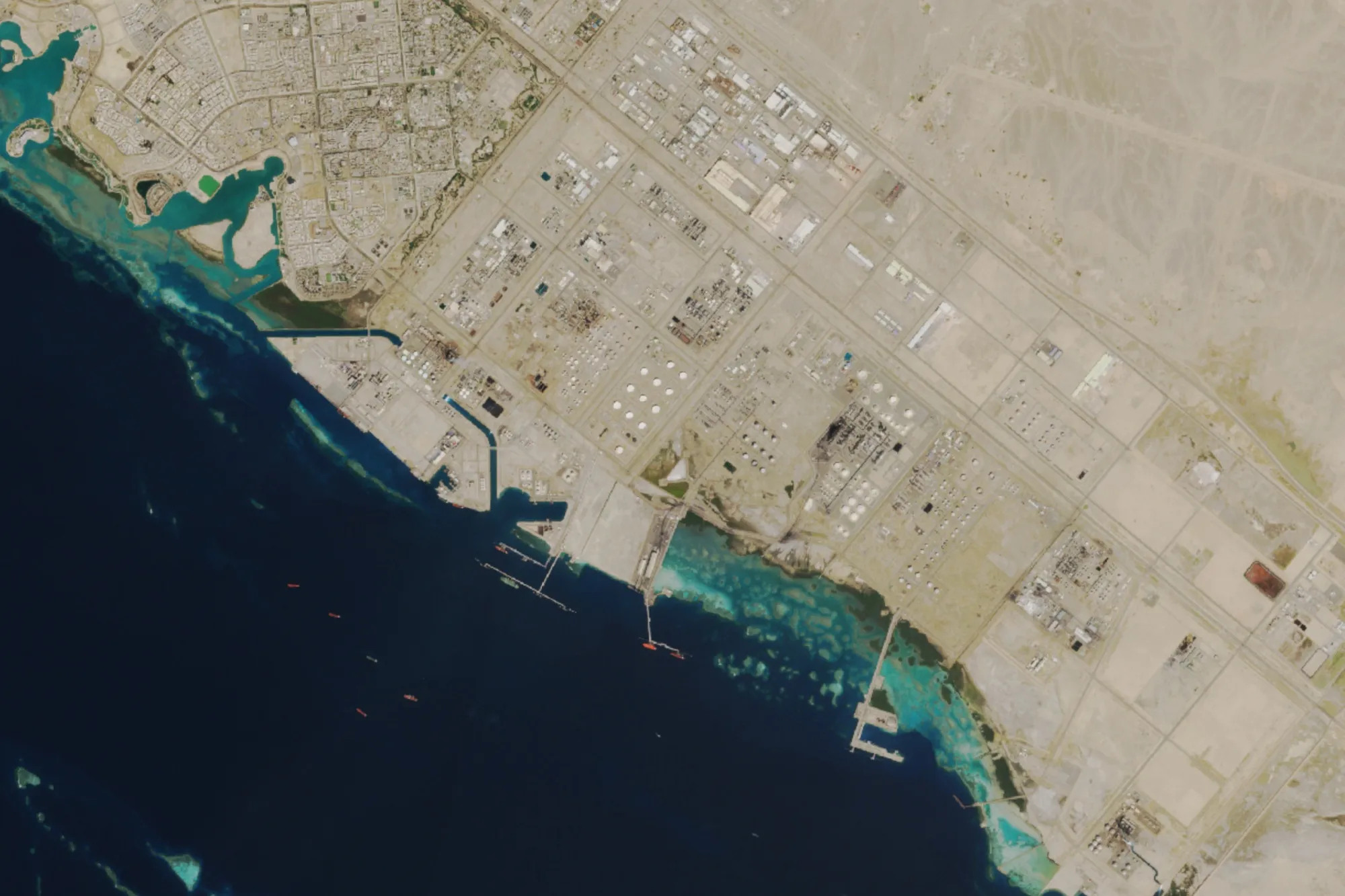
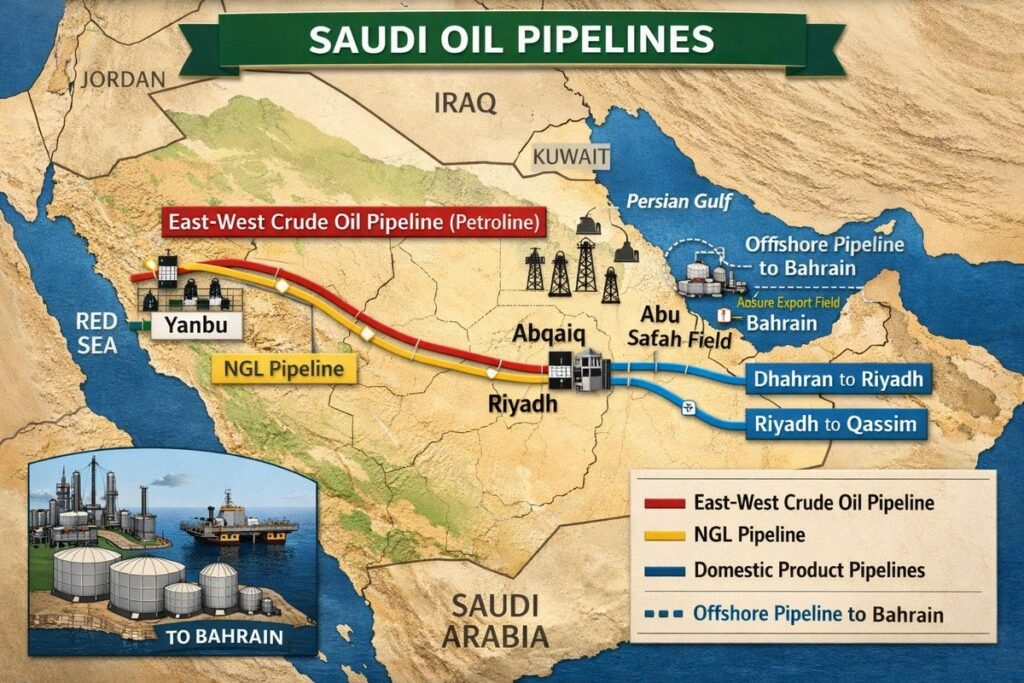
In a remarkable display of strategic foresight and engineering resilience, Saudi Arabia has ramped its East-West Pipeline—also known as the Petroline—to full capacity of 7 million barrels per day (bpd), fully bypassing the disrupted Strait of Hormuz.
This milestone comes at a critical moment. The ongoing Iran conflict has effectively closed the Strait of Hormuz to many commercial shipments, threatening roughly 15–21 million bpd of global crude flows that normally pass through this vital chokepoint. Yet Saudi Aramco has executed a textbook contingency plan, redirecting massive volumes of Arab Light and Extra Light crude from eastern fields at Abqaiq across 1,200 kilometers of desert to the Red Sea export terminal at Yanbu.
Aramco CEO Amin Nasser confirmed earlier this month that the pipeline would hit its mechanical limit “in the coming days” as customers rerouted. Today, Bloomberg reports it is operating at that exact 7 million bpd threshold, keeping Saudi exports—and by extension, global oil markets—moving when they otherwise might have ground to a halt.
This is more than just a pipeline story. It’s a masterclass in long-term energy security planning. Built in the 1980s during the Iran-Iraq War precisely to hedge against Hormuz risks, the East-West system has been steadily upgraded over the decades. Drag-reducing agents, terminal expansions, and emergency conversions have pushed its nameplate capacity to today’s levels. While Yanbu’s loading capacity imposes practical limits (exports recently hit record levels of around 3.6–4 million bpd), the infrastructure is delivering exactly what it was designed for: uninterrupted supply to Asia and beyond.
Other Bypass Pipelines Minimizing Global Disruption
Saudi Arabia isn’t alone in its contingency playbook. Several other regional pipelines are helping offset the Hormuz shortfall and keeping markets from total chaos:UAE’s Habshan-Fujairah Pipeline (ADCOP): This 400-km line carries crude from Abu Dhabi’s onshore fields directly to the Gulf of Oman port of Fujairah, completely outside the Strait. It is now running at its maximum capacity of approximately 1.5–1.8 million bpd, up sharply from pre-crisis levels.
Iraq-Turkey (Kirkuk-Ceyhan) Pipeline: This route sends northern Iraqi crude to the Mediterranean port of Ceyhan in Turkey. While current flows are more modest (around 250,000 bpd amid past technical and contractual issues), it provides an additional non-Hormuz outlet and could scale further.
Collectively, these bypass systems are delivering a meaningful fraction of normal Gulf flows—far from a full replacement, but enough to prevent catastrophic shortages and give the world breathing room while diplomatic and security efforts continue.
Arab States Align with the United States on Reopening the Strait
Several key Arab Gulf states have stepped forward in coordination with the United States to address the Hormuz crisis. The United Arab Emirates and Bahrain have been particularly active, joining a growing multinational coalition—now numbering around 22 nations—that is offering support for safe passage operations. Bahrain has advanced a UN Security Council resolution calling for “all necessary means” to keep the strait open, while the UAE has signaled willingness to participate in a potential Hormuz security task force.
GCC members, including Saudi Arabia, the UAE, Bahrain, Kuwait, Qatar, and Oman, have collectively condemned Iran’s actions and are pushing for coordinated diplomatic and security responses alongside the Trump administration. This alignment reflects a shared interest in protecting energy security and global trade routes critical to the entire region.
Houthis Join the Fray: Impact Player or Target?
As the crisis deepens, Yemen’s Iran-backed Houthis have signaled—and now begun—their entry into the conflict. On March 28, the group claimed its first ballistic missile strike targeting Israel and warned that “fingers are on the trigger” for direct military intervention if additional red lines are crossed (such as broader alliances against Iran or use of the Red Sea for hostile operations).
The Houthis’ potential role is twofold and high-stakes. On one hand, they could become a significant impact player, reviving their proven Red Sea disruption playbook from 2023–2025. Attacks on shipping through the Bab al-Mandeb Strait would directly threaten the very bypass route Saudi Arabia now relies on—oil arriving at Yanbu must still navigate the Red Sea to reach global markets. A renewed Houthi campaign could compound the Hormuz shutdown, drive insurance rates sky-high, and force even longer detours around Africa.
On the other hand, the Houthis risk becoming prime targets. Their missile and drone infrastructure proved vulnerable to previous U.S. and allied strikes, and any escalation would likely draw renewed attention from coalition forces already stretched thin. Regional analysts note that while the group can inflict real economic pain, sustained air campaigns have historically degraded their capabilities without fully eliminating the threat.
Either way, Houthi involvement raises the specter of a multi-chokepoint crisis—Hormuz plus Bab al-Mandeb—testing the resilience of global energy infrastructure like never before.
The Bottom Line
Saudi Arabia’s achievement today is proof that decades of prudent planning can pay enormous dividends when geopolitics turns volatile. By hitting 7 million bpd on the East-West Pipeline—and with parallel efforts from the UAE and Iraq—the Gulf is demonstrating that strategic infrastructure can keep the world’s oil markets functioning even under extreme pressure.
The coming weeks will test whether diplomatic coalitions, additional bypass capacity, and military resolve can restore normal flows—or whether new disruptions from the Houthis will push the system to its limits. One thing is certain: foresight built these pipelines, and foresight will be required to protect them.
Appendix: Sources
- Reuters: Saudi pipeline pumping 7 million bpd of oil, bypassing Hormuz (March 28, 2026) – https://www.reuters.com/business/energy/saudi-pipeline-pumping-7-million-bpd-oil-bypassing-hormuz-bloomberg-news-reports-2026-03-28/
- Bloomberg via Yahoo Finance: Saudi East-West pipeline hits 7 mln bpd amid Hormuz disruption (March 28, 2026) – https://uk.finance.yahoo.com/news/saudi-east-west-pipeline-hits-142610326.html
- Al Jazeera: Saudi, UAE, Iraq: Can three pipelines help oil escape Strait of Hormuz (March 27, 2026) – https://www.aljazeera.com/economy/2026/3/27/saudi-uae-iraq-can-three-pipelines-help-oil-escape-strait-of-hormuz
- CNBC: Two pipelines helping Saudi Arabia, UAE bypass the Strait (March 12, 2026) – https://www.cnbc.com/2026/03/12/strait-of-hormuz-oil-pipelines-iran-war-saudi-arabia-uae.html
- New York Post: Allies lining up behind Trump to open the Strait of Hormuz (March 24, 2026) – https://nypost.com/2026/03/24/opinion/allies-are-lining-up-behind-trump-to-open-the-strait-of-hormuz-cue-the-media-fury/
- Reuters: Yemen’s Houthis ready to join Iran war if needed (March 26, 2026) – https://www.reuters.com/world/middle-east/yemens-houthis-ready-join-iran-war-if-needed-raising-new-shipping-risk-2026-03-26/
- Al Jazeera: Houthis warn ‘fingers on the trigger’ (March 27, 2026) – https://www.aljazeera.com/news/2026/3/27/houthis-warn-fingers-on-the-trigger-as-us-israeli-war-on-iran-continues
- Euronews: Yemen’s Houthis say they carried out first military operation targeting Israel (March 28, 2026) – https://www.euronews.com/2026/03/28/yemens-houthis-say-they-carried-out-their-first-military-operation-targeting-israel-succes
- Additional context from S&P Global, WSJ, and Bloomberg reporting on pipeline capacities and coalition efforts (March 2026).
Energy News Beat will continue to monitor developments in real time. Stay tuned for updates on how this evolving situation impacts global energy security.