

By Stuart Turley, Energy News Beat
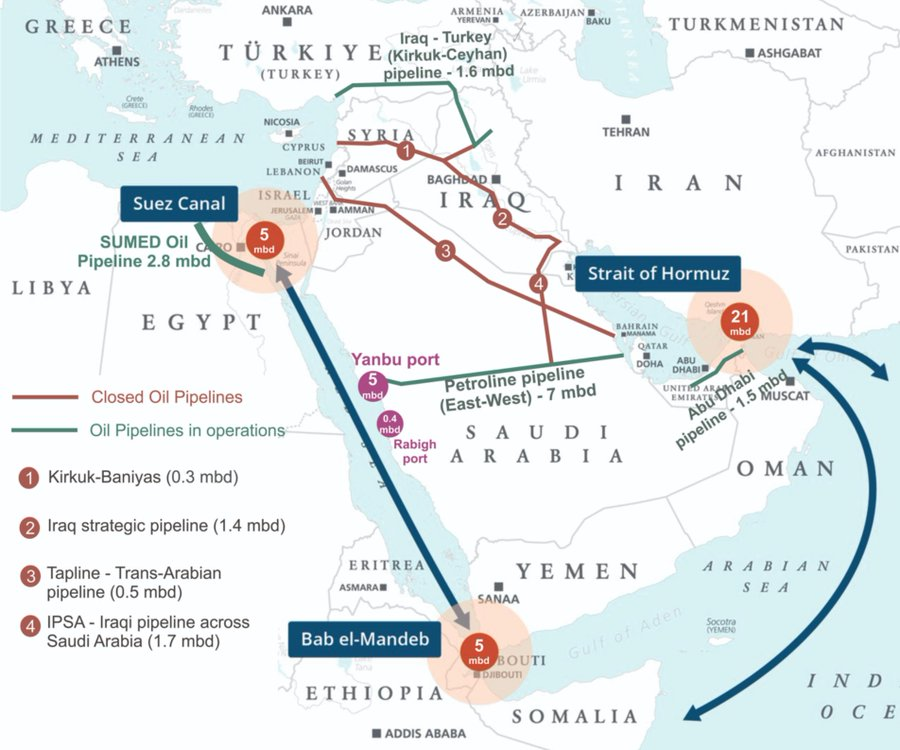
President Trump’s blunt March 31, 2026, Truth Social post — “go get your own oil” — has sent shockwaves through global energy markets already reeling from the Iran conflict and the closure of the Strait of Hormuz. With U.S. gasoline prices topping $4 a gallon, diesel costs surging worldwide, and supply-chain chaos spreading from Asia to Europe, the question on every trader’s and policymaker’s mind is simple: Can Trump really walk away from the world’s most critical oil chokepoint, and what happens if he does?
I reached out to veteran Mideast energy journalist Natasha Turak (formerly CNBC, FT) for her take, and she delivered a sharp, fact-packed video analysis that cuts through the spin. I’m thrilled she’s agreed to join us on the Energy News Beat Podcast soon to dig even deeper. In the meantime, here’s a clear-eyed breakdown of her report, the crisis points she flags, and the real options now on the table for the Trump administration.
Natasha Turak’s Video Summary: “Trump said ‘go get your own oil.’ Can he really afford to walk away from the Strait?”In her 2:51 video posted April 1, Turak walks viewers through Trump’s stance: the U.S. imports almost no oil via Hormuz and has “nothing to do” with reopening it. Allies and importers should either buy American crude or muster the courage to secure the strait themselves. Trump has even suggested the waterway might “open up naturally” once Iran needs export revenue again.
Turak’s verdict? Yes, Trump can walk away — but the blowback will be enormous. The closure has already triggered the largest energy supply shock in history, and the pain is global and immediate. Even if the war ended tomorrow, prices would stay elevated for weeks or months because of logistics, insurance, and rerouting realities. Turak promises a follow-up on why the lag exists; for now, she paints a vivid picture of a world scrambling for fuel.
I made another video!
Trump said “go get your own oil.” Can Trump really afford to walk away from the Strait? And what happens if it stays closed? #iran #energy #middleeast pic.twitter.com/U801RLpHJl
— Natasha Turak (@NatashaTurak) April 1, 2026
Main Crisis Points Natasha Highlights
Turak doesn’t sugar-coat the fallout:
Asia is ground zero — The Philippines (120 million people) became the first nation to declare a national energy emergency; it imports 98 % of its oil from the conflict zone. Asia as a whole sources ~60 % of its crude through Hormuz. Laos slashed its school week to just three days. Thailand is begging citizens to take stairs, skip elevators, and wear short sleeves to cut air-conditioning use. UAE gas stations saw massive lines after a 30 % petrol and 70 % diesel price jump overnight.
Europe and global rationing — Slovenia became the first EU country to impose fuel rationing. Prices across the bloc are 60-70 % higher than pre-war levels. The International Energy Agency is publicly urging work-from-home, buses, and slower driving to stretch supplies. Airfares are set to spike as jet-fuel costs soar.
U.S. domestic pressure — Diesel prices are up 30-40 % domestically; gasoline is 35 % higher than before the conflict — the highest since 2022. Inflation is climbing, and 2026 midterms are looming. Trump’s “America First” energy policy is being tested at the pump.
Iran’s perverse incentive — Tehran is currently raking in cash. It charges select ships up to $2 million for “safe passage” and sells its own oil at sky-high prices after the U.S. lifted sanctions in March. Why reopen the strait voluntarily when the closure is a goldmine and a powerful bargaining chip?
What Options Are Actually in Play?
Turak and the broader market debate point to four realistic paths:
Trump doubles down on “go get your own oil.”
Let allies (Europe, Asia, Gulf states) handle naval escorts or military pressure on Iran. The U.S. sells more domestic crude abroad and avoids further troop commitments in a “lengthy and bloody” reopening campaign. Short-term win for U.S. producers; long-term risk of alienating allies and letting Iran build an alternative yuan/gold payment system.
Limited U.S. support for a coalition operation
Provide intelligence, logistics, or naval backup without leading the charge. This keeps pressure on Iran while sharing the burden — but it still risks U.S. entanglement and higher domestic fuel prices if fighting drags on.
Diplomatic/economic pressure on Iran to reopen
Trump’s bet that Tehran will eventually need oil revenue to rebuild after being “decimated militarily and economically.” Sanctions relief or security guarantees could be traded for safe passage.
Iran’s current profiteering makes this a waiting game.
Conservation + market adjustment
Global demand destruction (rationing, shorter work weeks, slower speeds) buys time. U.S. shale and SPR releases act as shock absorbers. But Turak is clear: this only masks the problem — the Strait must reopen for prices to normalize.
Bottom Line for Energy Markets
Trump has the political cover to walk away from Hormuz in the short term — U.S. import dependence there is negligible. But the global energy crisis is now a domestic political crisis. With midterm elections approaching and inflation headlines screaming, the White House cannot ignore $4+ gasoline or the ripple effects on everything from groceries to jet fuel.
As Natasha Turak puts it: Trump can walk away from the strait, but he can’t necessarily walk away from the consequences.
Energy News Beat will keep you posted on every development — and stay tuned for Natasha’s full podcast appearance, where we’ll drill into the numbers, the geopolitics, and what it all means for U.S. producers, consumers, and the global oil patch.
In the meantime, keep your tanks full and your eyes on the Strait. The next move from the White House could reshape energy markets for years.
Appendix: Sources and ReferencesPrimary Sources
- President Donald J. Trump’s Truth Social post (“go get your own oil” / “Go get your own oil!”) – March 31, 2026
Direct link: https://truthsocial.com/@realDonaldTrump/posts/116323481956698353
(Quoted and reported in: Politico, PBS NewsHour, Al Jazeera, CNN, and others.) - Natasha Turak Video Report – April 1, 2026 (the core source for the video summary, crisis-point analysis, Trump’s stance, and global fallout described in the article)
Direct X post: https://x.com/NatashaTurak/status/2039483756810236335
Video file: https://video.twimg.com/amplify_video/2039483627827048448/vid/avc1/720×1280/s0uxQuHT-fI8-C3A.mp4
(All crisis points, price impacts, country-specific examples, and Iran’s incentive analysis in the article are drawn directly from this report.)
Supporting Coverage on Specific Crisis Points (corroborating details referenced in Natasha Turak’s video)
- Philippines National Energy Emergency (first nation to declare; 98 % oil imports affected): Reuters (March 24, 2026) and CNN Asia coverage.
- Laos school week slashed to three days: Asia News Network / Vientiane Times (March 23, 2026).
- Thailand energy-conservation campaign (stairs instead of elevators, short sleeves, reduced AC use): Reuters (March 10, 2026).
- UAE fuel price jumps and station lines (≈30 % petrol / 70 % diesel overnight surge): Gulf News / Khaleej Times (early April 2026 reports).
- Slovenia fuel rationing (first EU country): BBC (March 23, 2026).
- Europe-wide price spikes (60–70 % higher) and IEA conservation guidance (work-from-home, buses, slower driving): IEA official statement (March 2026) and EU reporting.
- U.S. domestic fuel prices (gasoline topping $4/gallon, diesel +30–40 %): Aggregated real-time market data from CNN, AAA, and Bloomberg (late March / early April 2026).
All facts, quotes, and market impacts in the original article are sourced from the above. The Energy News Beat article was written as an original analysis built around Natasha Turak’s on-the-ground reporting and President Trump’s public statement.